The Sutton Hoo Ships Company was formed about 6 years ago with the primary objective of building a full size replica of the 7th century Anglo Saxon ship found burried at Sutton Hoo back in 1938. I would explain more here, but since their own website explains this far better than I can, a visit the Sutton Hoo Ship’s Company is recommended to find out more.
It always sounded like an absolutely brilliant idea to me, but since I don’t posess any of the required skills, it never occured to me that I could be of any use to the project. But in January 2022, or thereabouts, I was passing by the Longshed on the Woodbridge riverfront (where the longship is being made), at the same time as the craftsmen inside were splitting a large oak log in half. It was a beautiful piece of oak, and I jokingly commented that I’d like to get some of it on my lathe. This triggered a suggestion that I should apply to be a volunteer because they were looking for people who could make objects to sell as project merchandise. The building process leaves a certain amount of wood offcuts, or pieces that can’t be used in the construction and so rather than simply ending up in the woodburner, they can used to raise money. And having the provenance of being from the same trees that were used to build the longship is rather nice.
The bowls
The longship is constructed primarily from oak, and it’s mostly freshly cut. This is excellent for turning since it’s somewhat softer than it is when seasoned. It will darken and distort a little as it dries, but usually in an attractive and ‘organic’ way. Splitting is a risk, but provided the walls are kept fairly even and the pith is kept away from the rim, this shouldn’t be too much of a problem.
Most of the bowls are simply finished with linseed oil. This is probably reasonably authentic since the anglo-saxons used flax to make fabrics and linseed oil is a by-product of that process. Visually, I like the combination of oak and linseed oil – it provides a pleasant ‘warmth’. Beeswax is an alternative, and both have the further advantage of being food-safe and allergic reactions are uncommon. If the finish starts to deterorate a fresh layer of oil or wax can simply be applied with a cloth.
However, neither of these finishes are particularly robust, so some of the later bowls have been finished with carnuba wax, which is much harder.
The process of turning a wooden bowl is illustrated in a separate page, which also describes the process for staining the wood a deep blue colour using iron acetate.
Looking after a wooden bowl.
Guidance on looking after a wooden bowl may be found in this downloadable MS Word document: About your Wooden Bowl
Gallery
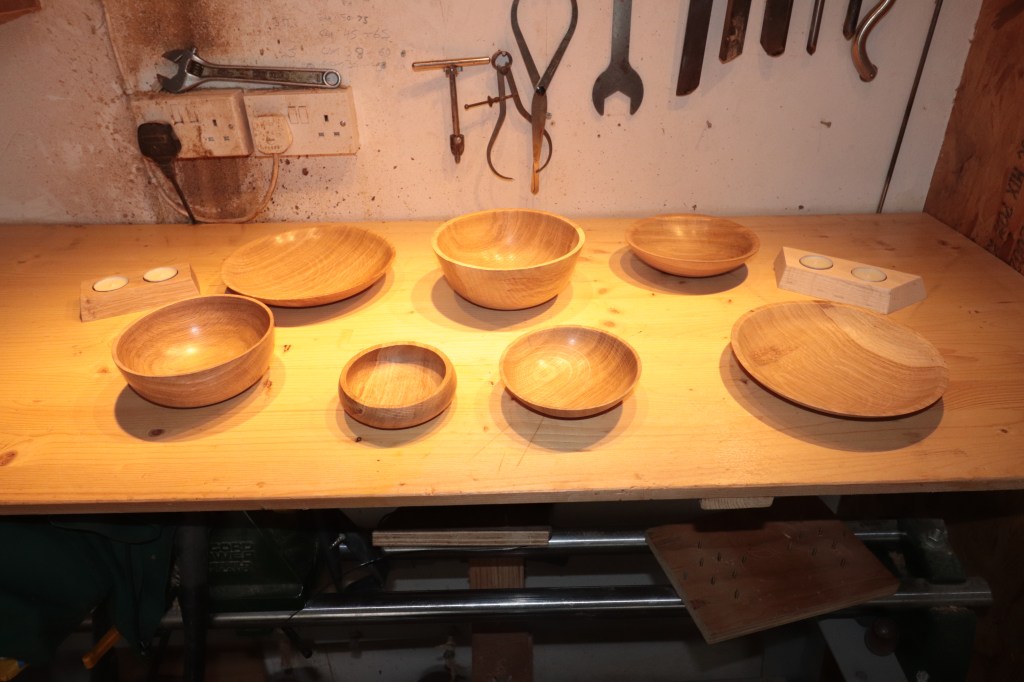
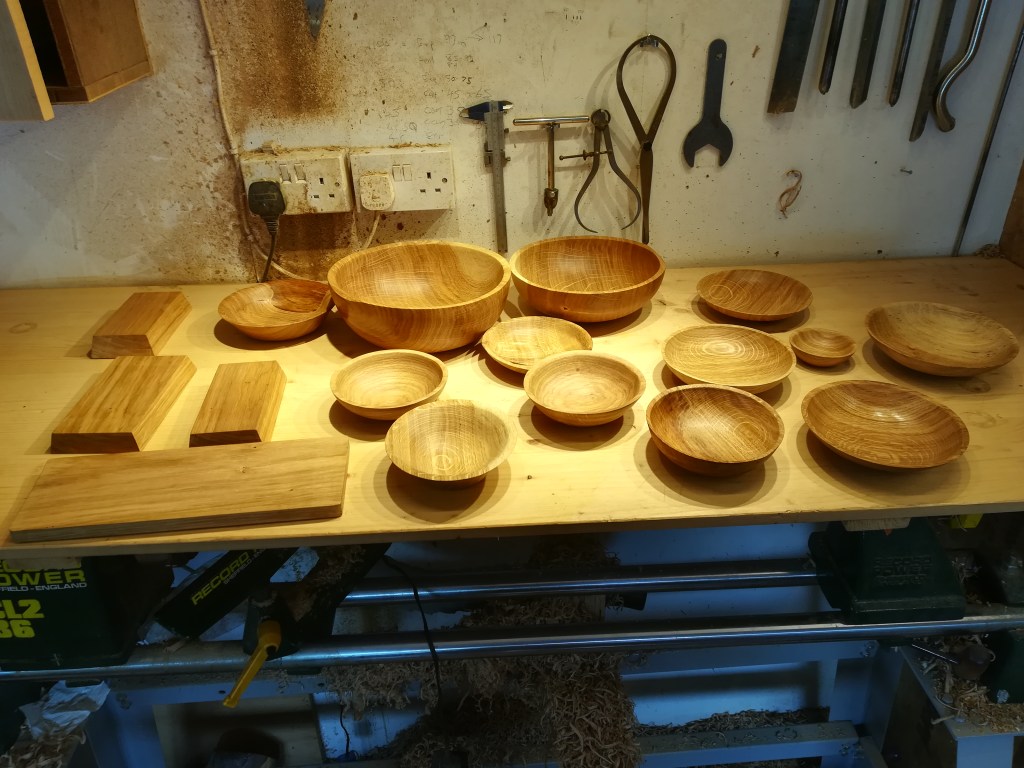
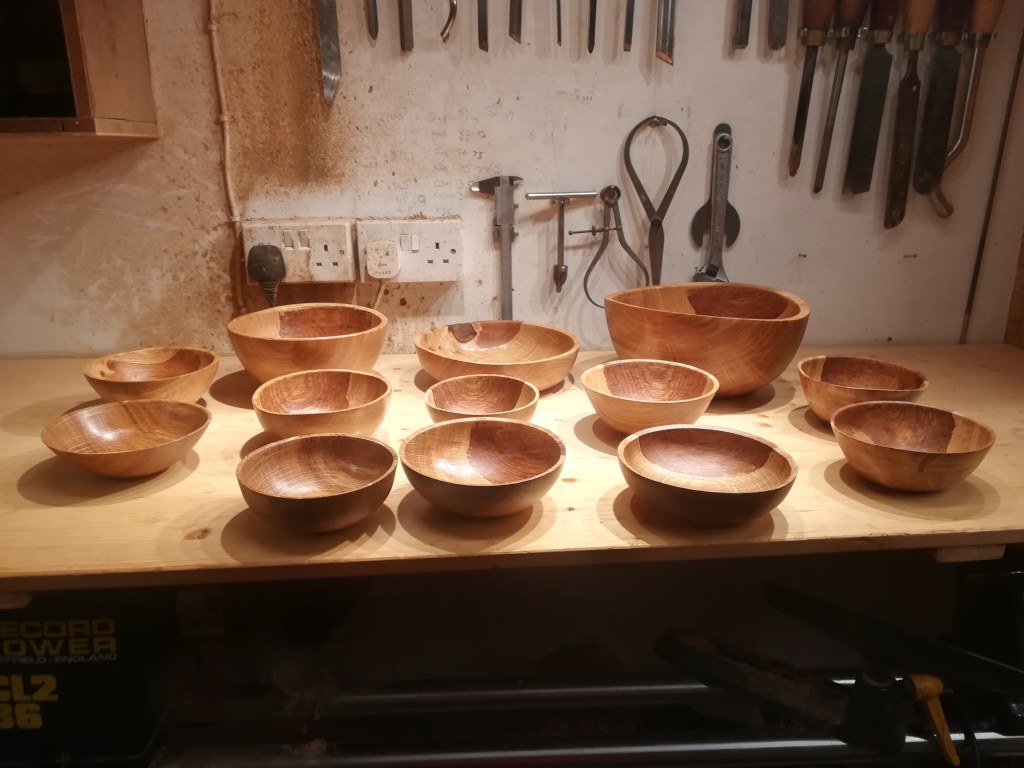
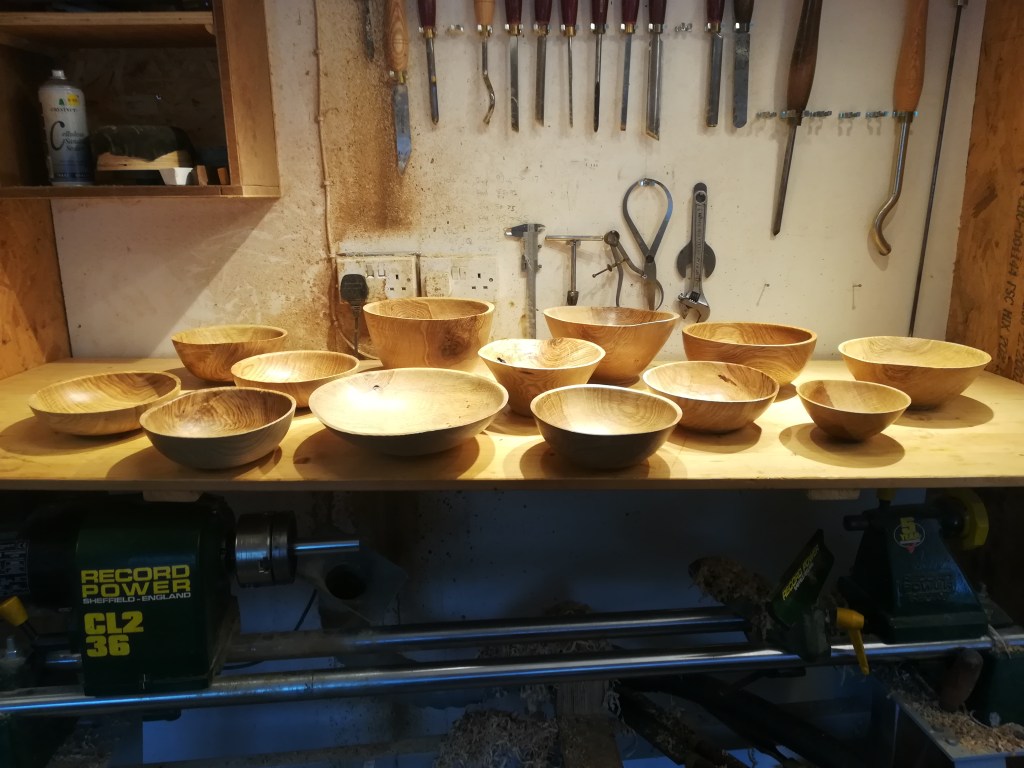
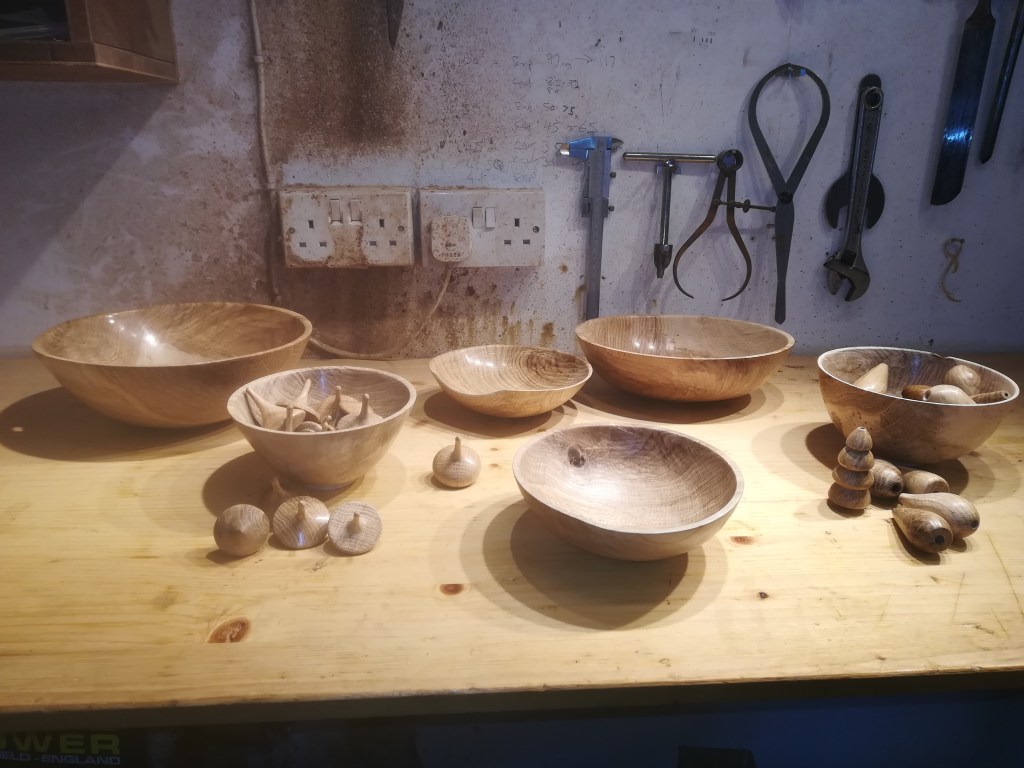
The pictures below show my contribution during 2022-24 – a total of over 120 bowls and some other small items such as tealight holders, light pulls and badges with some of the smaller pieces.
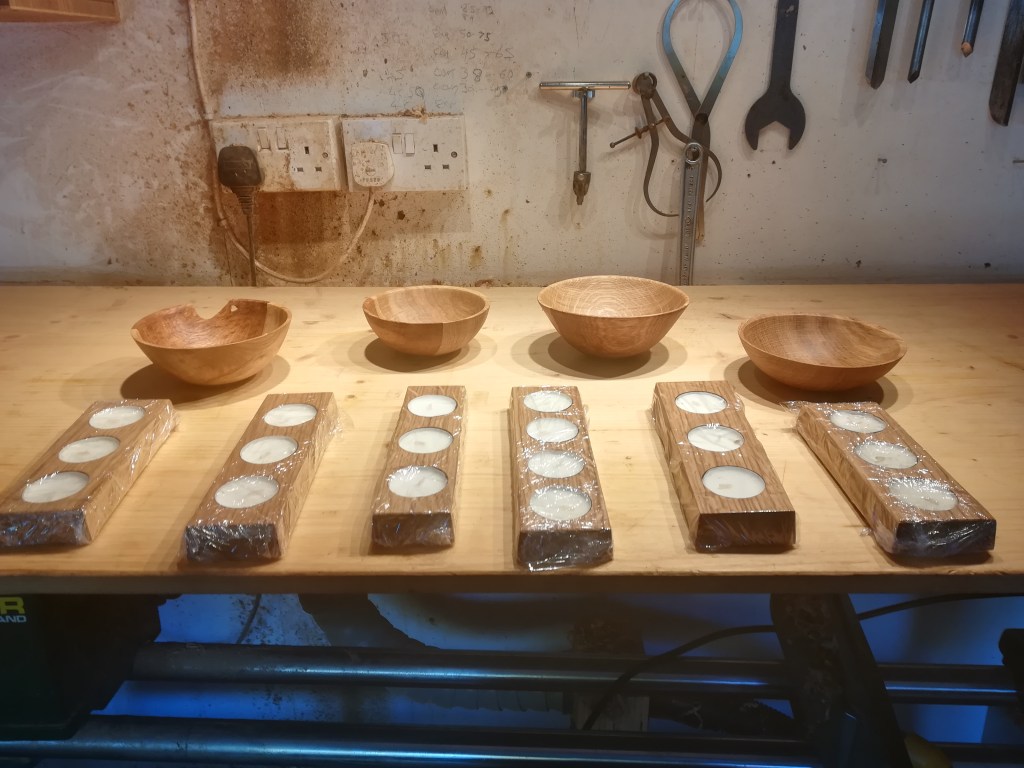
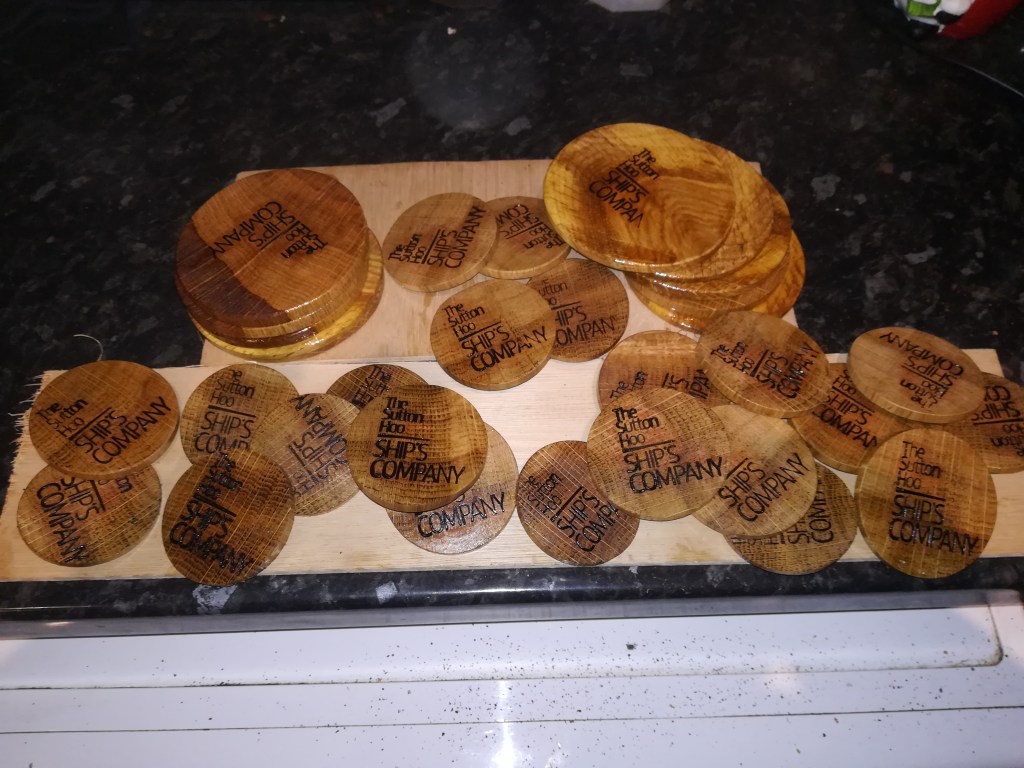

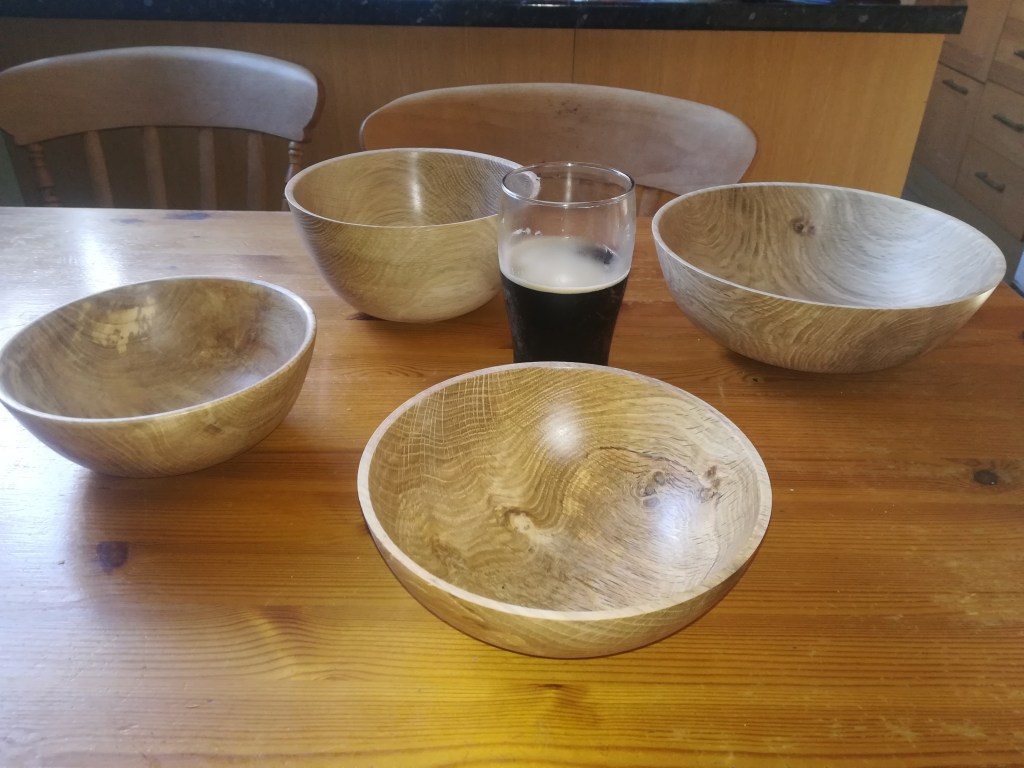
The photo below is not good. Sorry – I can’t work out what I was thinking of.
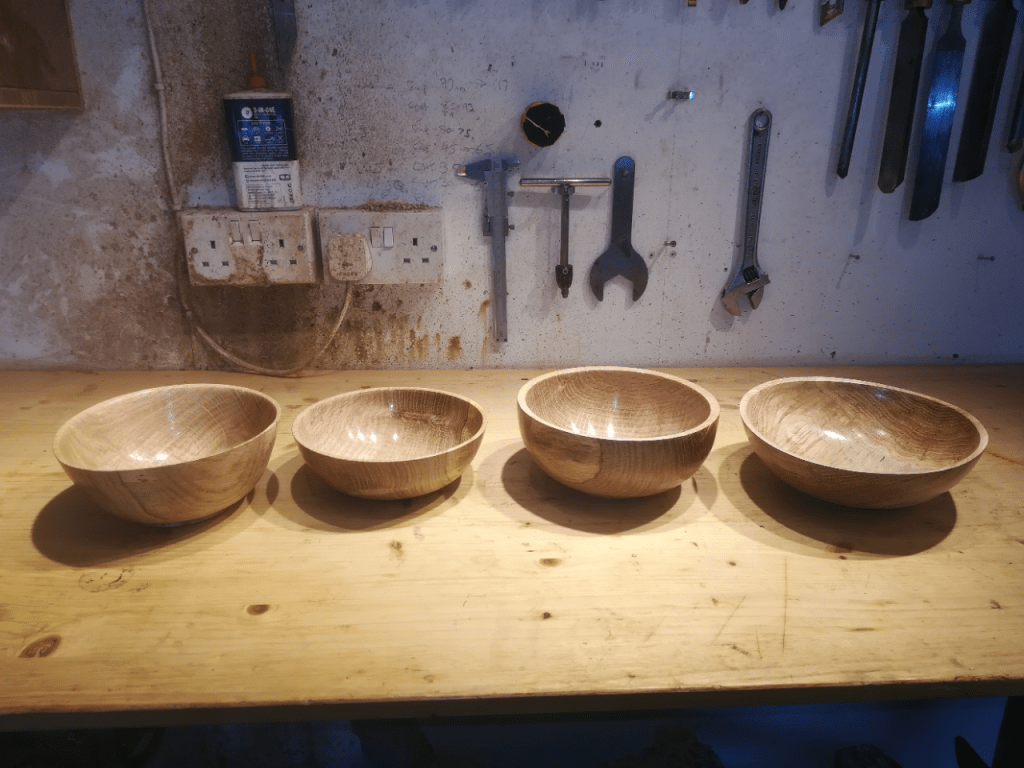
26 April 2023
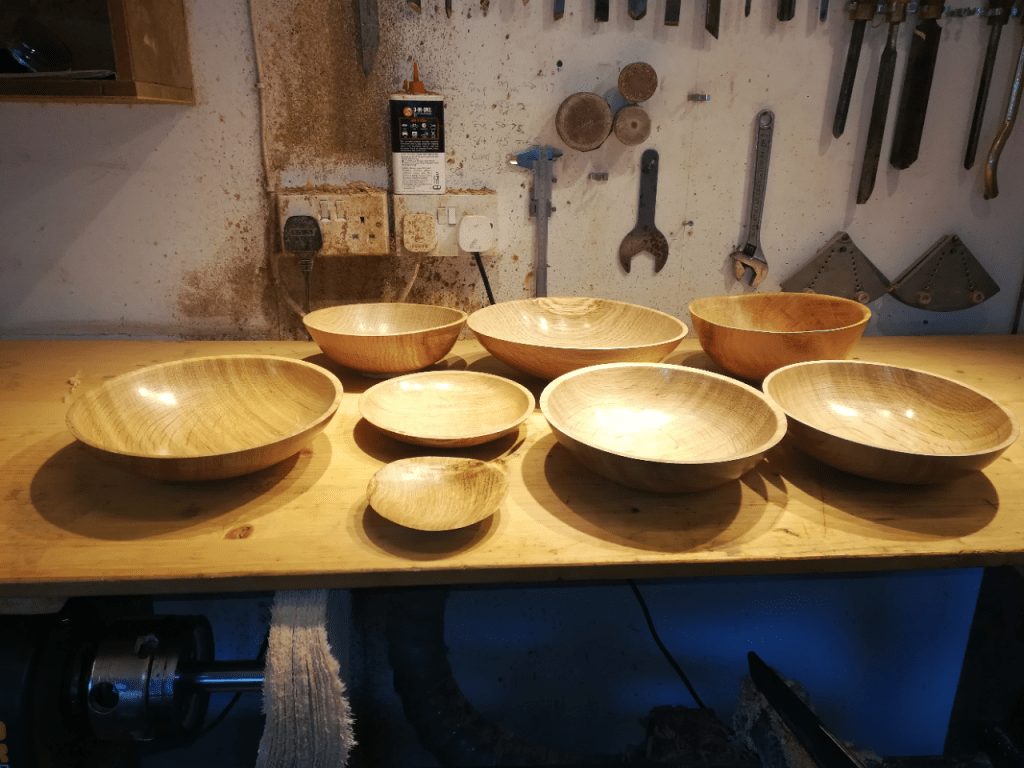
Since the last picture I’ve made a whole lot more bowls – I’ve stopped counting but they now must be well over 120. It doesn’t really matter; the important thing is they help fund this magnificant boat. I know the’re all basically the same – a ‘foot’ about 83mm in diameter and a simple curved shape – but it’s all about letting the wood do the talking. It doesen’t need much more; I think they’re all beautiful. As long as supporters keep buying them I’ll keep making them. This is the January 2024 batch:
 The Sheeprug Pages.