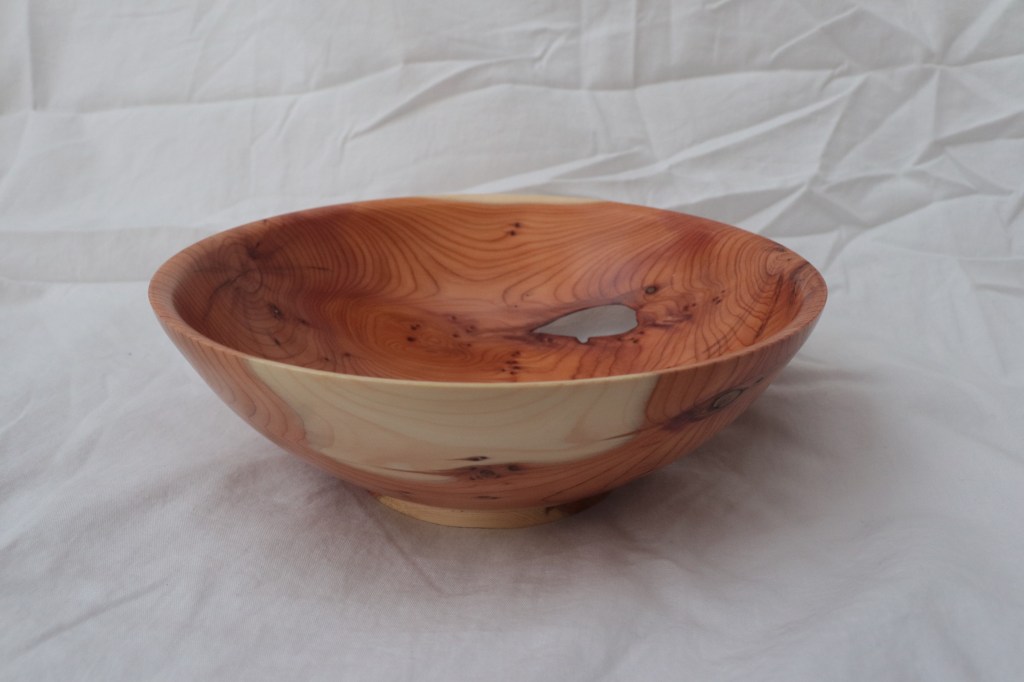
Yew bowls.
Yew probably has the most spectacular grain of all native British trees, with the heart-wood being a beautiful mid brown hue. It also often has a rather irregular shape, with deep flutes running along its length, resulting in fissures and holes in the finished shape. The bowls here were made from a yew tree growing in Hasketon churchyard.
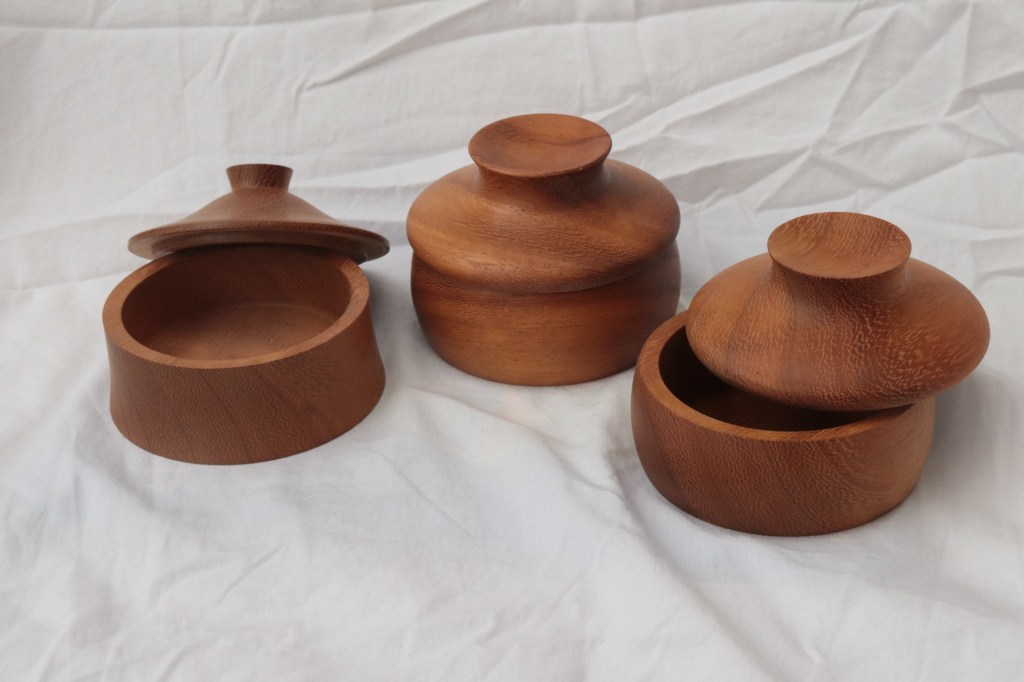
Small boxes.
These were made from iroko, a tropical hardwood who’s colour ranges from very dark to quite light. The lids have a friction fit. The diameter is about 100mm.
Cherry bowls
There are lots of varieties of cherry – these bowls were made from one of the ornamental cherry trees that grew on the western side of the Woodbridge bypass. (The council contractors has taken one down and left the wood pile by the side of the road – it seemed rude to overlook this kind ‘offer’).
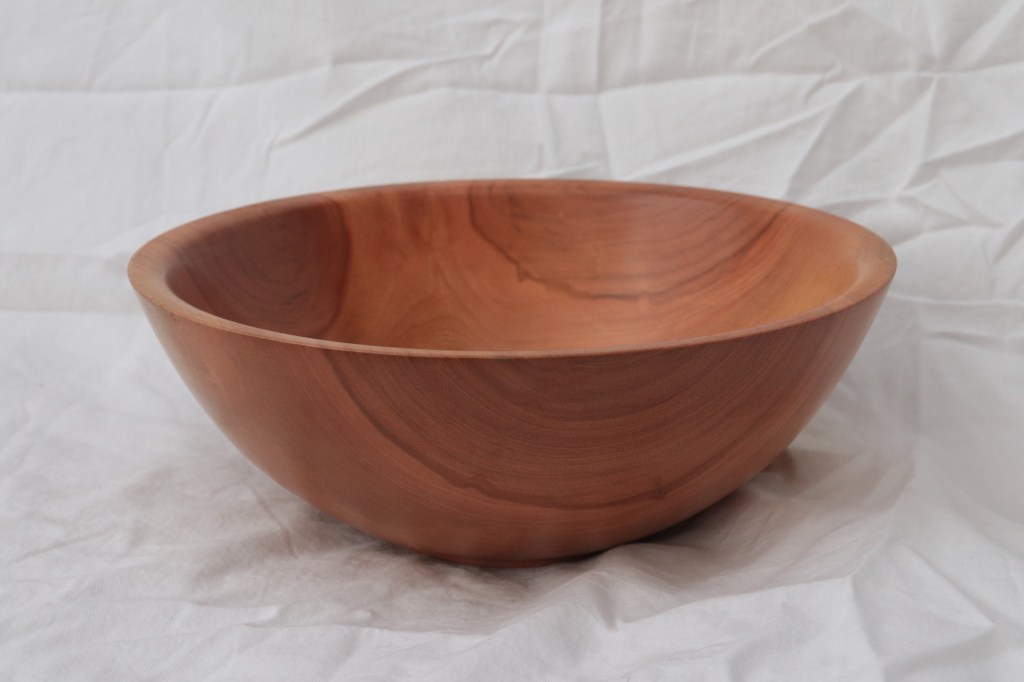
They come from opposite sides of the same log, but I made the one on the right with thinner walls. The log was cut close to a fork, so there are 3 hearts instead of the usual two.
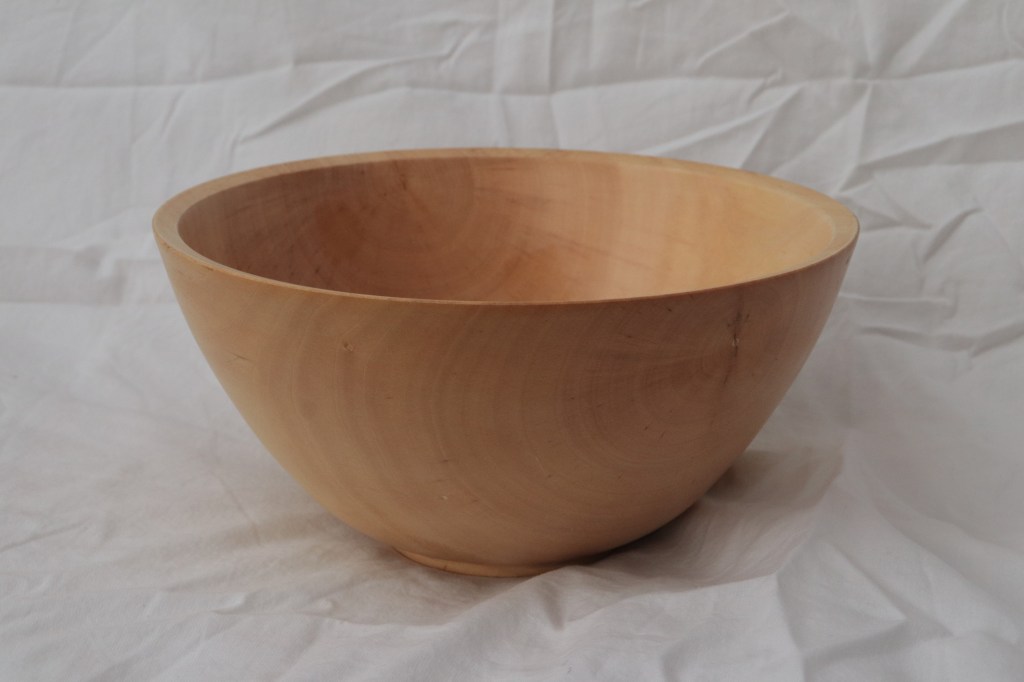
Sycamore
Common sycamore is a non-native British tree, and is considered by some to be an invasive species. It is highly fertile, grows fast and can dominate woods if left unchecked. It also attracts aphids by the million, which leaves its large leaves sticky, spotty and unpleasant to walk under.
But its wood is rather excellent, having a pale colour which takes stains and other treatments well. It is easy to work, and is very good for guitars and other musical instruments. This bowl was made from a tree cut down just outside Bury St. Edmunds.
Experiment in staining sycamore with indigo.
Since sycamore takes stains well, I though it an excellent candidate for experimenting with natural dyes. Indigo, or woad to the ancient Britons and denim to the clothing industry, is a natural plant based dye with a beautiful blue colour. The vase and bowl shown below were dipped twice in an indigo vat, and then sealed using Danish oil.
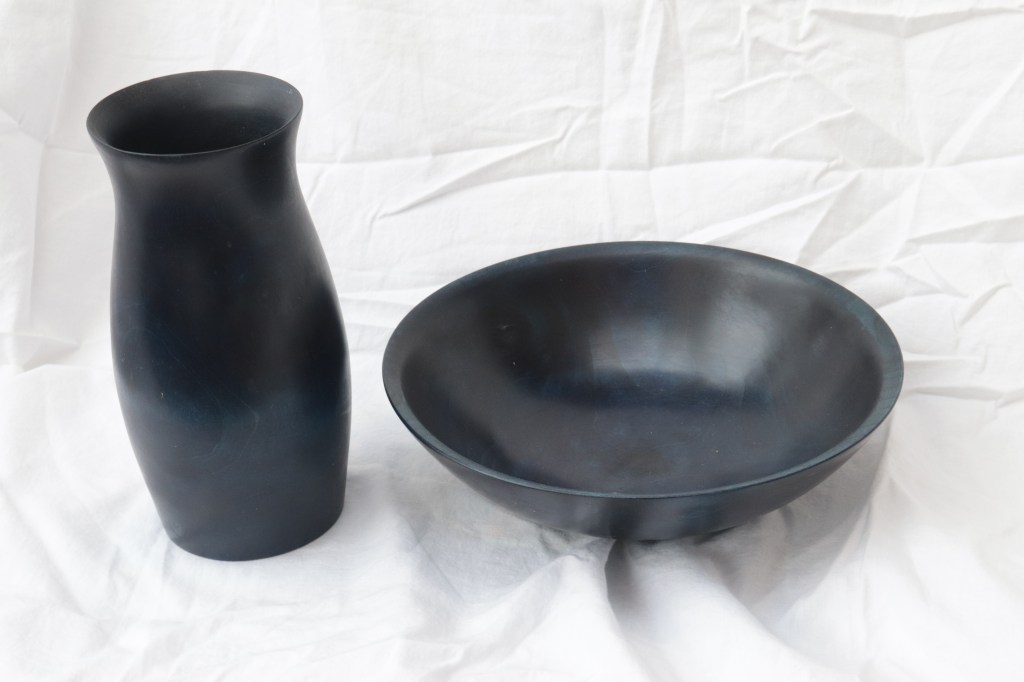
I like it a lot, but the process needs some further refinement, and unfortunately it accentuates any surface blemishes in the wood. Basically, work in progress!
Various pots
The small pots shown below were turned from yew branchwood, and hollowed out.
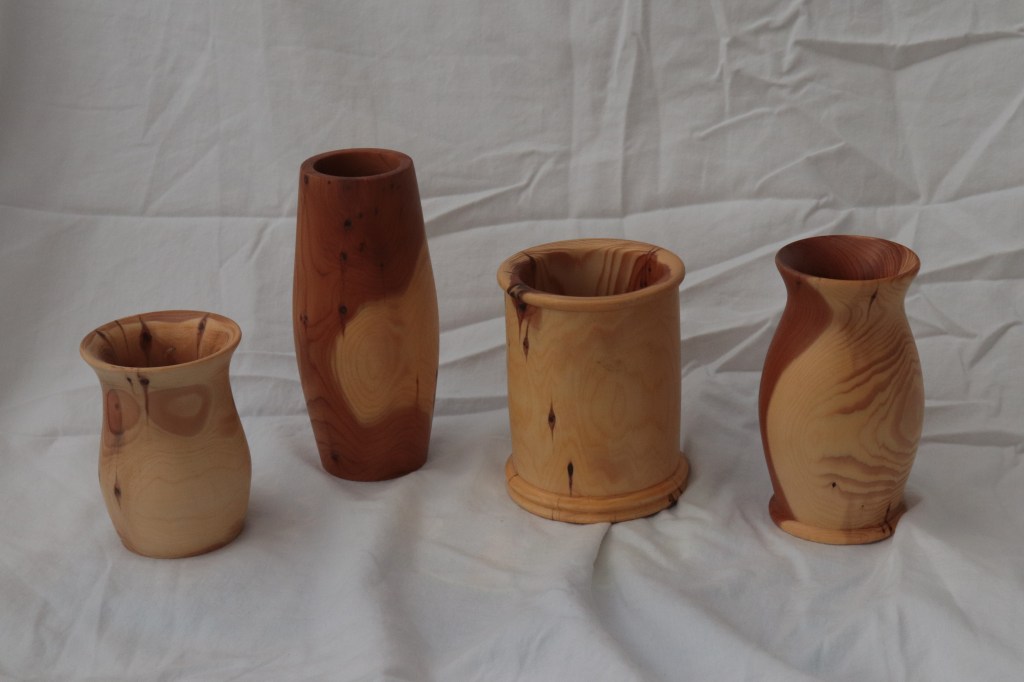
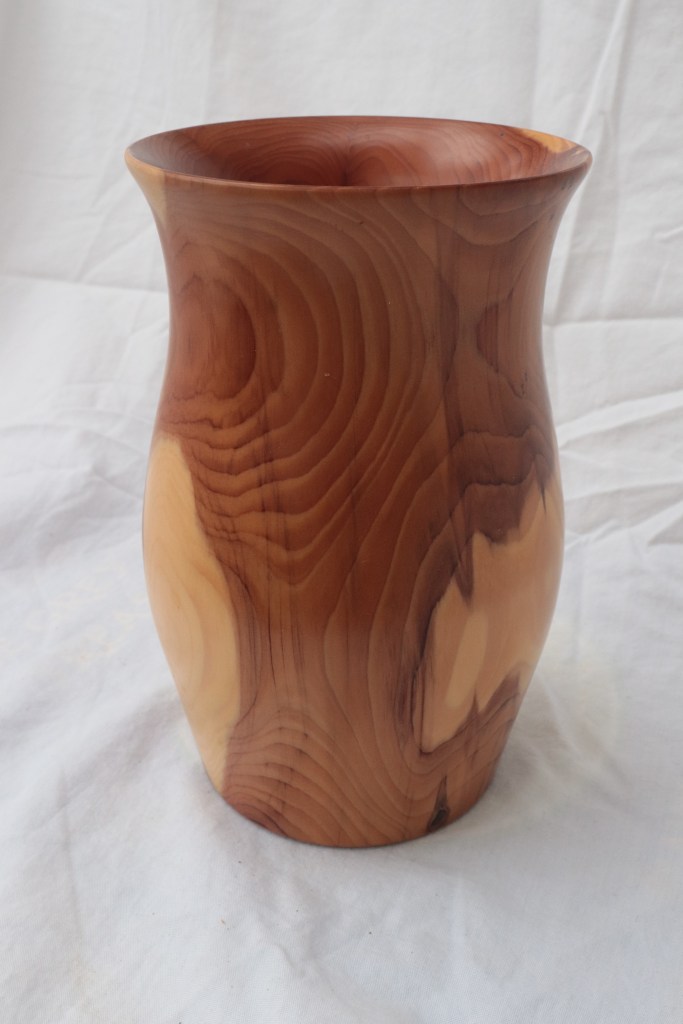
I rather enjoy making these vases, which are usually about 7″ high, and have a plastic insert to allow them to hold water. I call the shape the ‘Marilyn’, for obvious reasons.
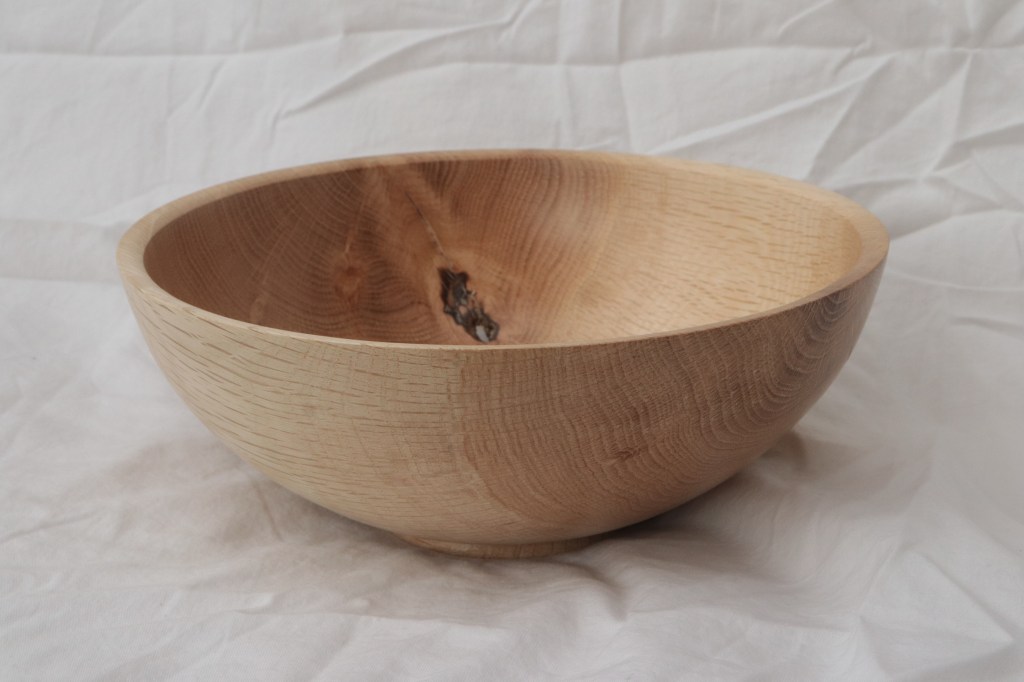
Oak Bowls
I think oak is one of my favourite woods for bowls – for some reason it simply feels satisfying to work with. Making any bowl from a log is generally a two-stage process. First a rough turning is made, leaving the wood about an inch thick, which is left to season for a few months. It can then be finished after the moisture content has reduced and any warping is complete. This picture shows a rough turning awaiting finishing.
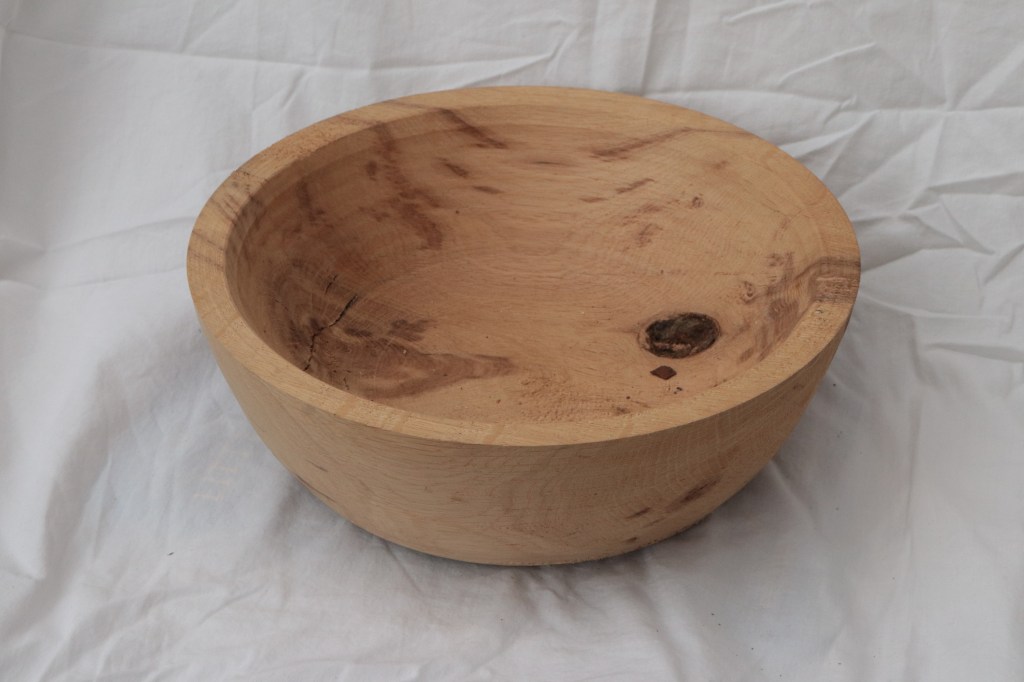
These bowls show a typical finished result after the second turning.
Coasters
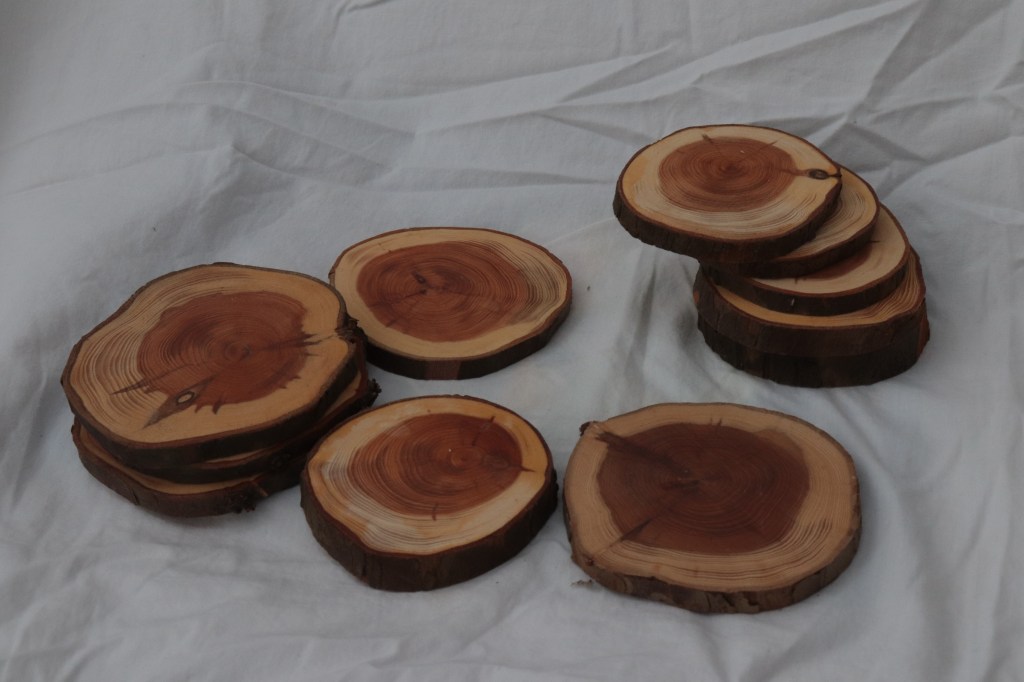
A simple slice through a 3-4 inch branch can make a very attractive and useful coaster. These are yew, but any wood could be used.
 The Sheeprug Pages.