
No. 2810, 4th Battalion Suffolk Regiment, who died on 21st June 1915 aged 27.
Buried in the St. Vaast Post Military Cemetery, Richebourg-l’Avoue, France
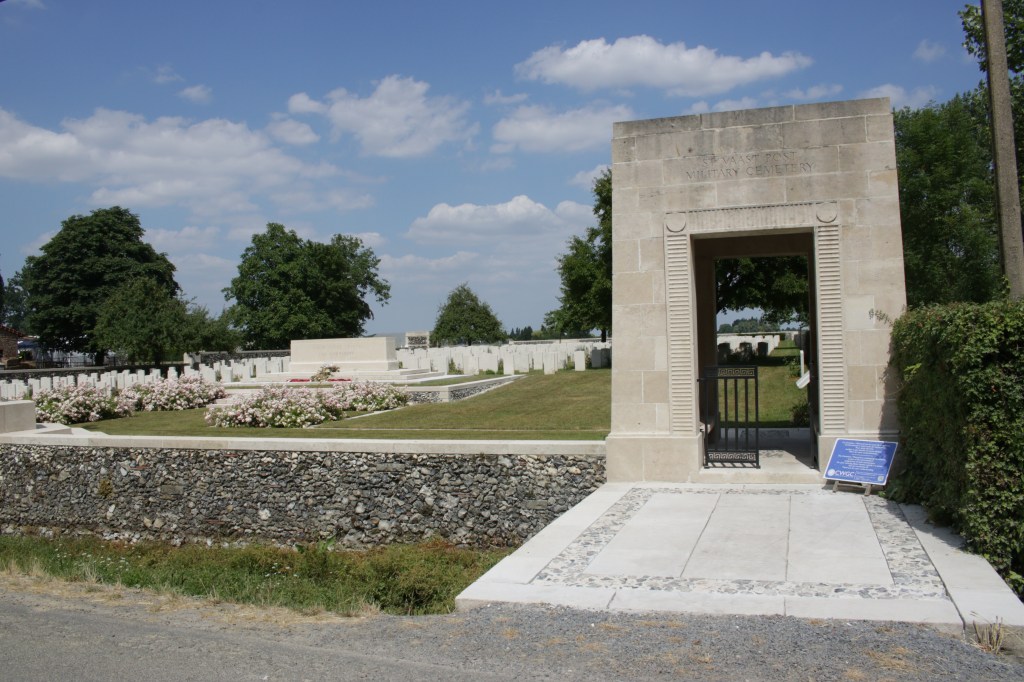
Frank was born in Benhall, Saxmundham June 1888, son of Sheperson and Mary Wright, and lived at Mill Farm House.
He died from artillery fire whilst serving in trenches near Neuve Chapelle, France.
Before the war he worked as a Farm Labourer.
Personal details
See also page on Archibald wright.
Frank Sheperson Wright was born in Benhall in 1888. His parents were Sheperson Wright, Carpenter, [B. Woodbridge c1860] and Mary Wright nee Tuner [B. Dedham c1862]. Based on the census information the family seem to have moved around the area, living in Dedham in 1891, Hoo in 1901 and Mill Farm House, Hasketon in 1911. Frank was born in Benhall, 1888 Saxmundham, Archibald born 1894 in Melton, they had two younger sisters, Mary Hope Ruth [B. Melton 1896] and Margery Dorothy [B.Melton, 1898] and an older sister Vivienne Louise Lewis [B. Benhall, 1886] who had already left home aged 14 or younger to care for the elderly Jane St. Ledger (possibly an aunt) in Chiswick.
In 1911 Frank was working as a ‘hay turner’ on Havergate Island.
See also entry on his younger brother Archibald Wright. Both served in the 4th Battalion of the Suffolk Regiment.
War service.
According to the Army WW1 Medal Roll Index Cards Frank arrived in France with the 4th Battalion on 28th February 1915. This is the same date as Archibald and John Williams. His army Service Records have not survived, so no other information is available.
Around this time the 4th Battalion was involved in actions in Neuve Chapelle and later serving in the trenches in the area. This extract from the Suffolk Regimental records explains how he was killed:
“After the Battle of Aubers Ridge (9th May 1915) the 4th Battalion remained in the Neuve Chapelle area. On June 21st the Germans bombarded the 4th Battalion’s trenches with 5.9” howitzers, 2nd Lieut. K.R. Mason and 3 men being killed and 3 others wounded. The men killed were Frank Wright, John Alcock and W C Welham.”
Also of Interest.
In the early part of the war the 4th Battalion formed part of the Jullundur Brigade, which included Sikh battalions from the British Indian Army. A number of the Sikhs also lost their lives and are buried in the St. Vaast Post Military Cemetery.
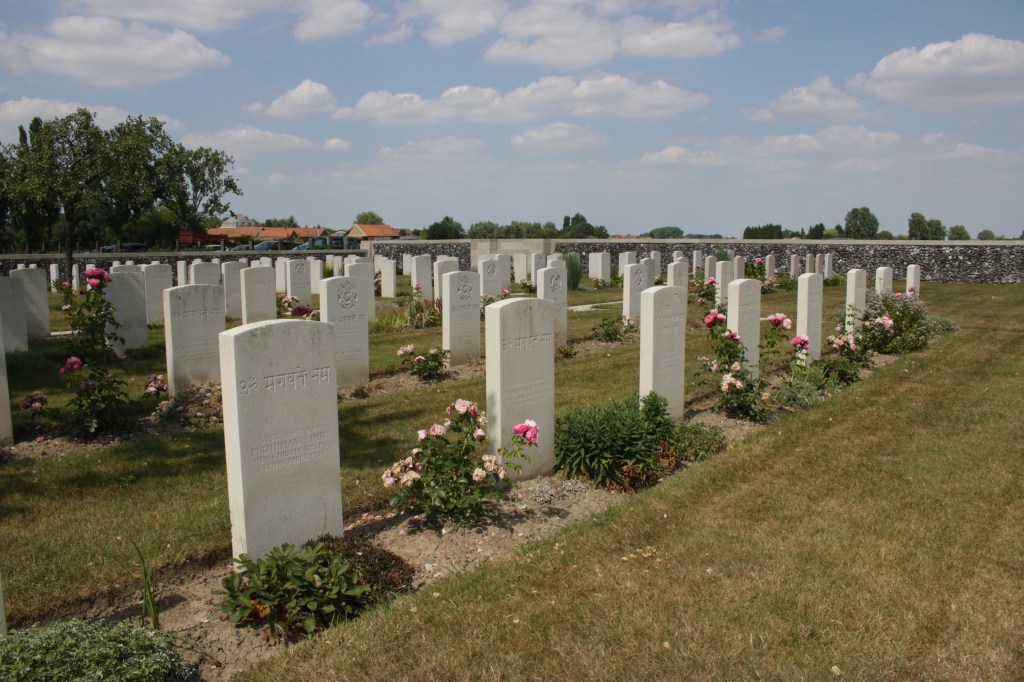
Unusually, the cemetery also contains the graves of some German soldiers. These men were buried in the spring of 1918 when the Germans occupied the area during their Spring 1918 offensive.

 The Sheeprug Pages.