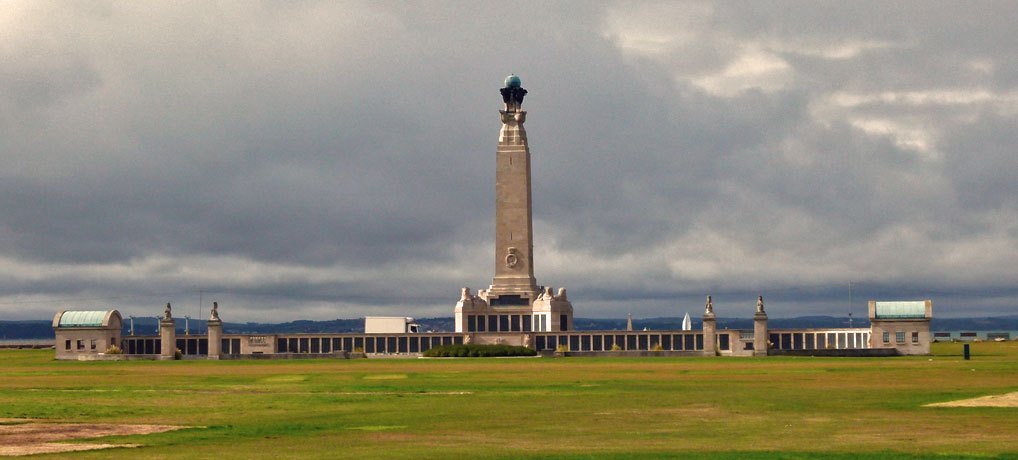
Percy was in the Royal Navy, serving on HMS Queen Mary, anddied on 31st May 1916 aged 18.
He is remembered at Portsmouth Naval Memorial
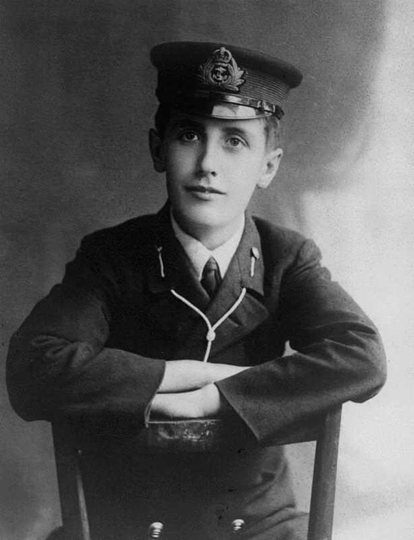
Percy was killed in Action during the Battle of Jutland
Born Upper Clapton, London in November 1897, son of Rev. Frederick and Mrs. Charlotte Wait, and lived in the Rectory, Hasketon.
Before the war he was a Naval Cadet.
Personal details
Percy was born in Upper Clapton, London in 1897. His parents were Rev. Frederick William Wait (B. Gloucester 1858) and Charlotte A Wait (nee Wells) [B. Yorkshire c1864 d.1941]. They had three children Charles Frederick Wells (Born May 1895) Percy Arthur Wells [B. Croydon 1897] Kathleen Mary (B. April 1904.) Percy was born in Upper Clapton, London in 1897.
In 1891 Frederick was Curate at St. Michaels, Croydon where both Percy and his older brother Charles were born. Frederick became Rector at Hasketon in 1907, and died in 1927.
In May 1910, aged 13 Percy became a Naval Cadet (Midshipman) at the Royal Naval College, Osborne Whippingham Isle of Wight, where he appears in the 1911 census.
Brother Charles Frederick Wells Wait (B. c1896) was also killed in 1916 during the Battle of the Somme – see separate page.
War service.
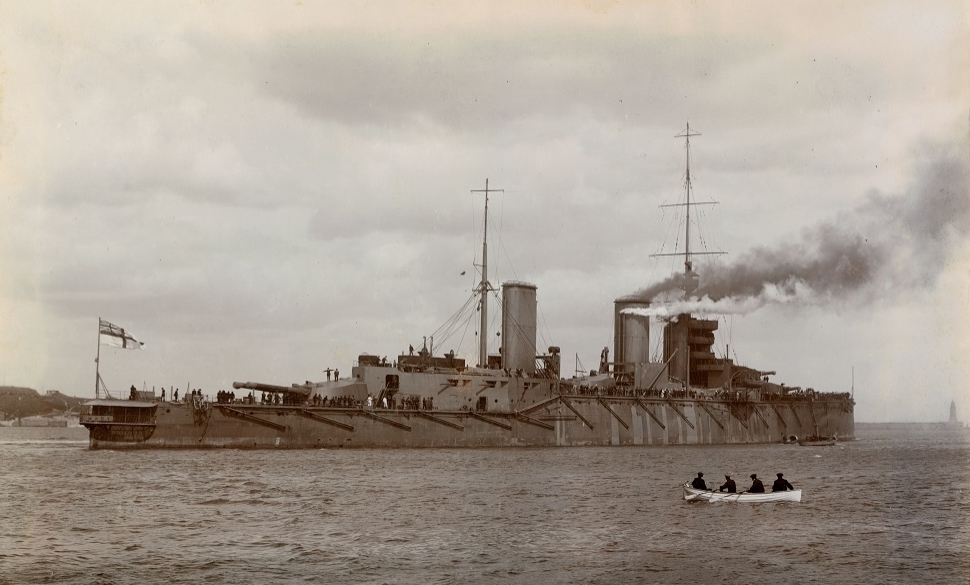
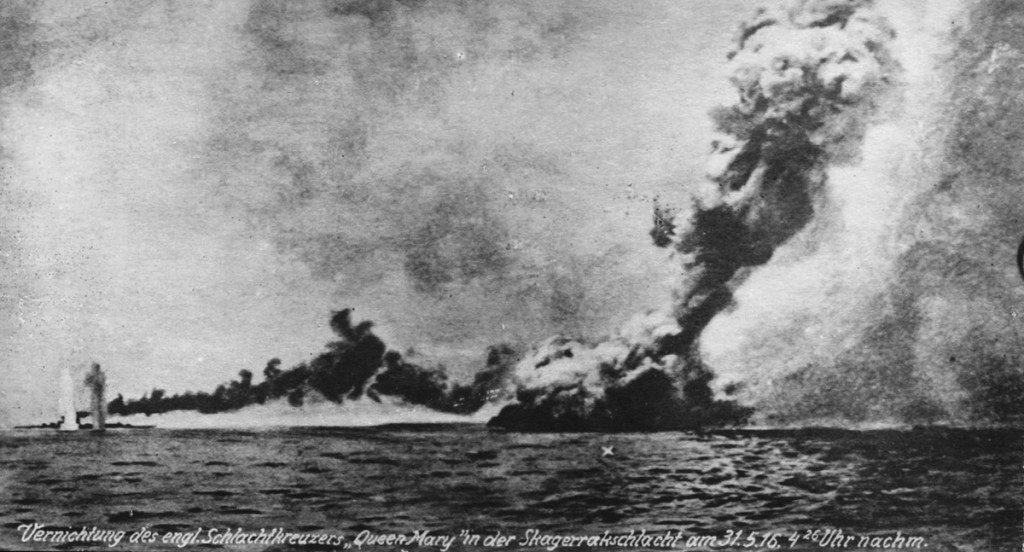
Percy served at the Dardanelles campaign on HMS Cornwallis in 1915. Later he was transferred to the battlecruiser HMS Queen Mary, which was sunk by shellfire from the German battlecruisers Derflinger and Seydlitz during the early stages of the Battle of Jutland. 1266 of the crew were lost, with only 20 survivors.
Battlecruisers were large warships of similar size to battleships, but having less protective armour in exchange for higher speeds. Their intended role was to hunt down slower smaller ships but be fast enough to avoid confrontations with larger more powerful ships. Unfortunately, by 1916 it had become more commonplace to use them alongside better protected battleships. This lead to disaster in the early stages of the Battle of Jutland, where 3 battlecruisers, HMS Invincible, MHS Queen Mary, and HMS Indefatigable suffered catastrophic explosions and were sunk with the loss of all but a handful of their crews.
 The Sheeprug Pages.