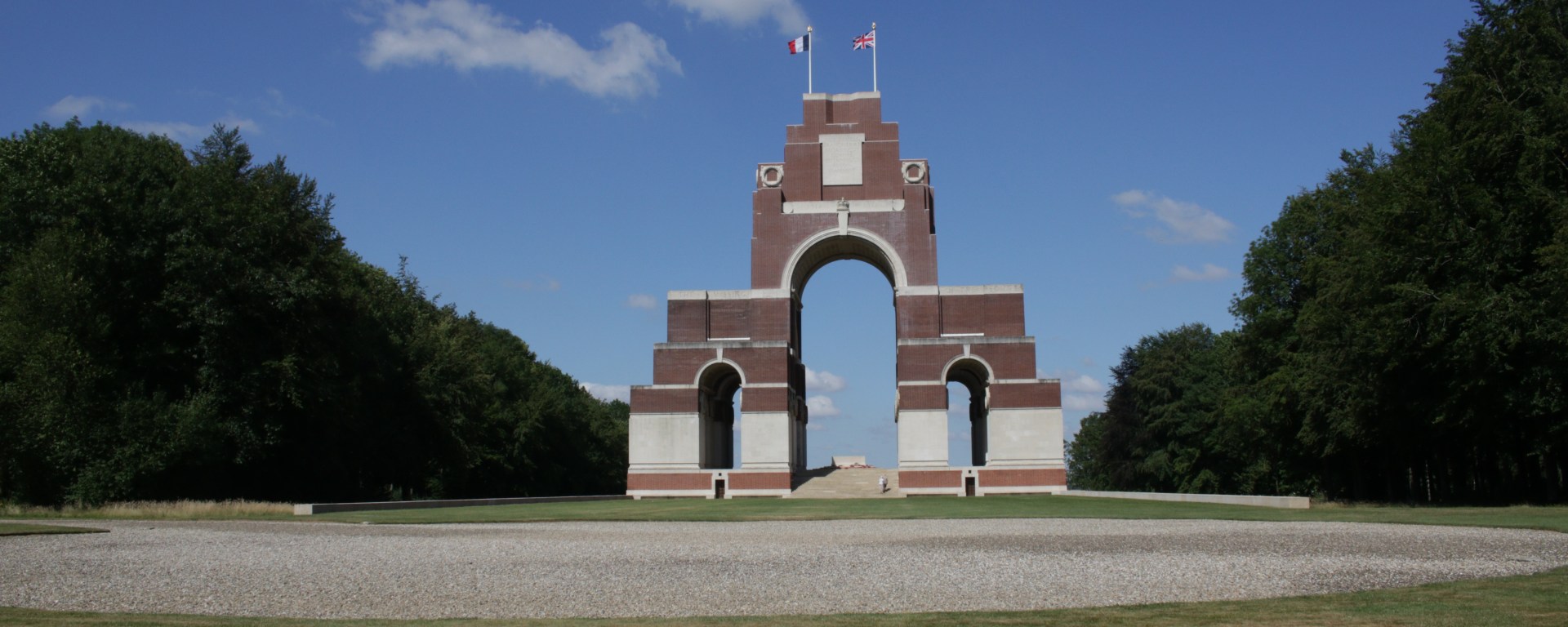
Charles has no known grave and is remembered at the Thiepval Memorial.
No. 3036. 4th Battalion Suffolk Regiment. He died on 20th July 1916 aged 28 during the Battle of the Somme whilst fighting at High Wood.
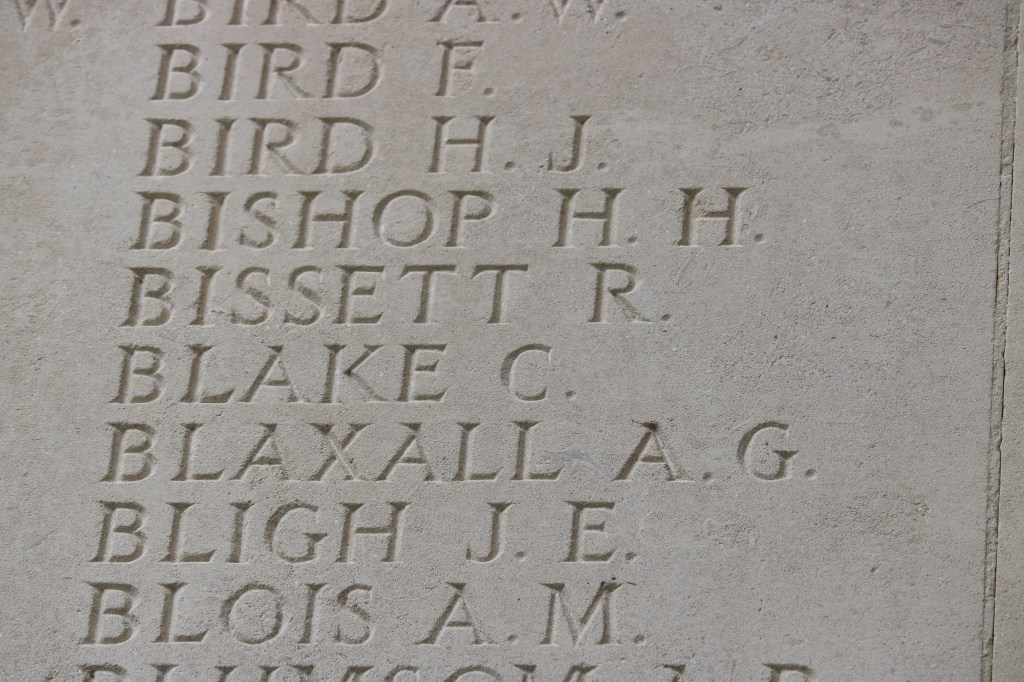
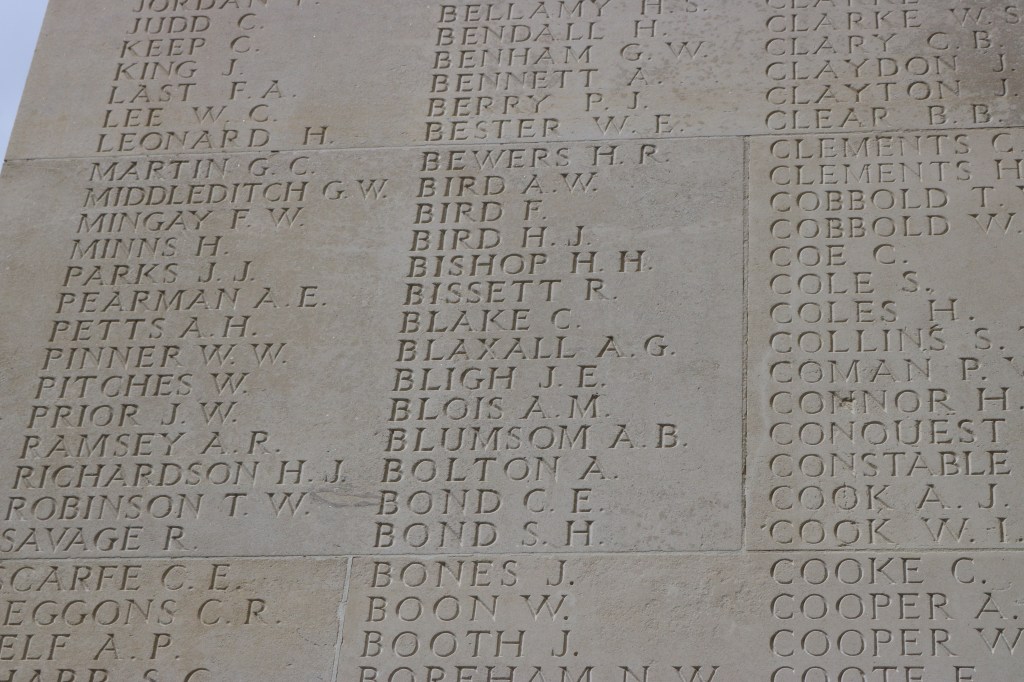
Charles was born Hasketon 1887, son of John and Elizabeth Blake, and lived in White House Lane.
Before the war he worked as an Agricultural Labourer
Personal Details.
Charles’s family were all born in Hasketon. His parents were agricultural labourer John Blake [B. Hasketon 1851] and Elizabeth Blake (nee Moss) [B. Hasketon 1853]. He was the 5th of eight children: James [B.1873], Mabel [B.1880], Eliza [B.1882], Alice [B.1885], Emma [B.1890] and James [b.1900]. By the 1901 Census his sister Mabel has married Frederick Tye and they are also living in the same house with their son James Tye.
In the 1911 census Charles is described as single, working as a Farm Labourer. Sadly, Mabel has died and Frederick is living elsewhere, but Charles’s 11 year old nephew, James Tye is still living with the family.
War service.
We have been unable to find any details of Charles’s military records apart from the Medals roll index, which indicates he was awarded the British and Victory Medals.
The 4th Battalion was heavily involved in the Somme campaign during the summer of 1916, sustaining heavy casualties in action on both 15th and 20th of July, and also later on August 18th. William probably took part in the first of these actions. The second involved an attack on High Wood in along with other regiments in the 19th Infantry Brigade. Charles was presumably killed or went missing during this action.
See the pages on the Battle of the Somme for more details.
Also of interest:
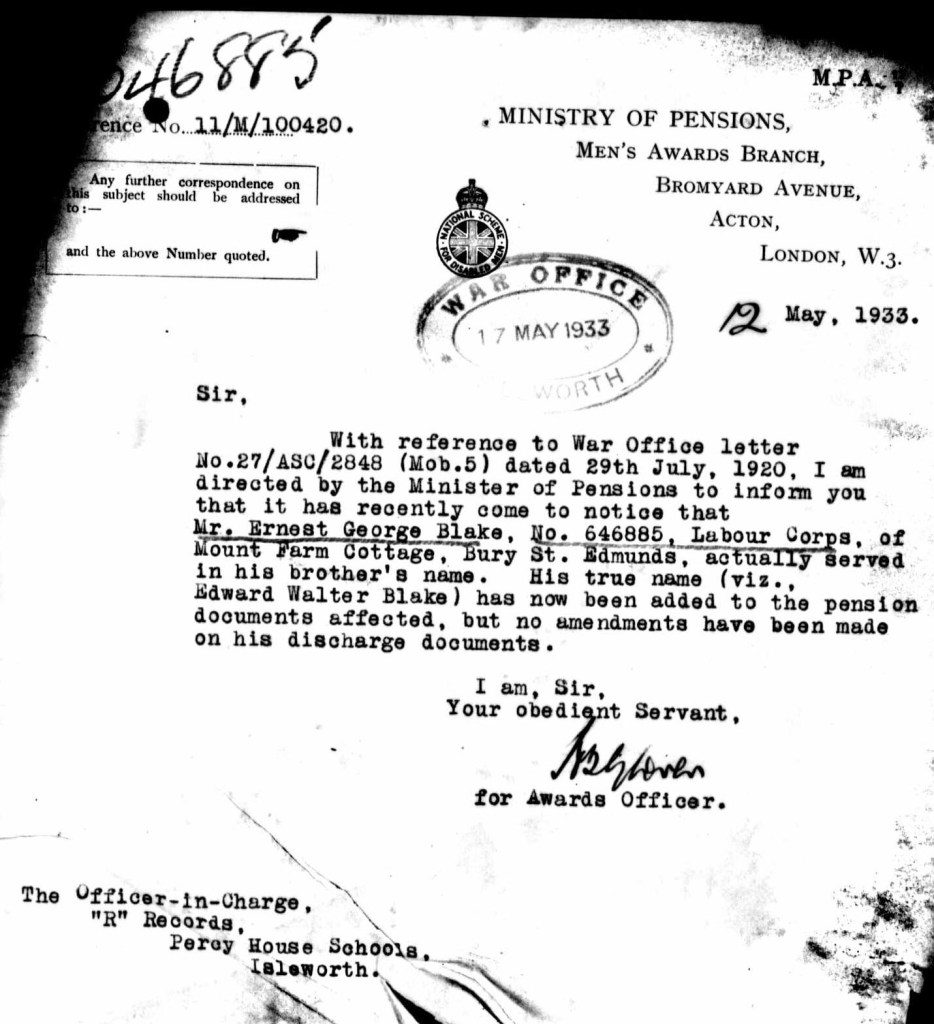
Charles’ cousin Ernest George Blake, [B. Hasketon c1888], also served during the War. His father George Blake [B. Hasketon c1855] was John Blake’s younger brother. Unusually, his service records have survived though they are badly damaged. He is listed as 13435, Suffolk 9th Battalion, but later in 1918 he was posted to the Labour Corps. These records indicate he wounded with a ‘GS Wd. back’, and discharged as physically unfit for service on 26th November 1918. In a further twist, the letter shown below from the Ministry of Pensions in 1933, highlights the curious fact that Ernest actually served in his twin brother (Walter) Edward’s name, although it’s not clear why!
 The Sheeprug Pages.