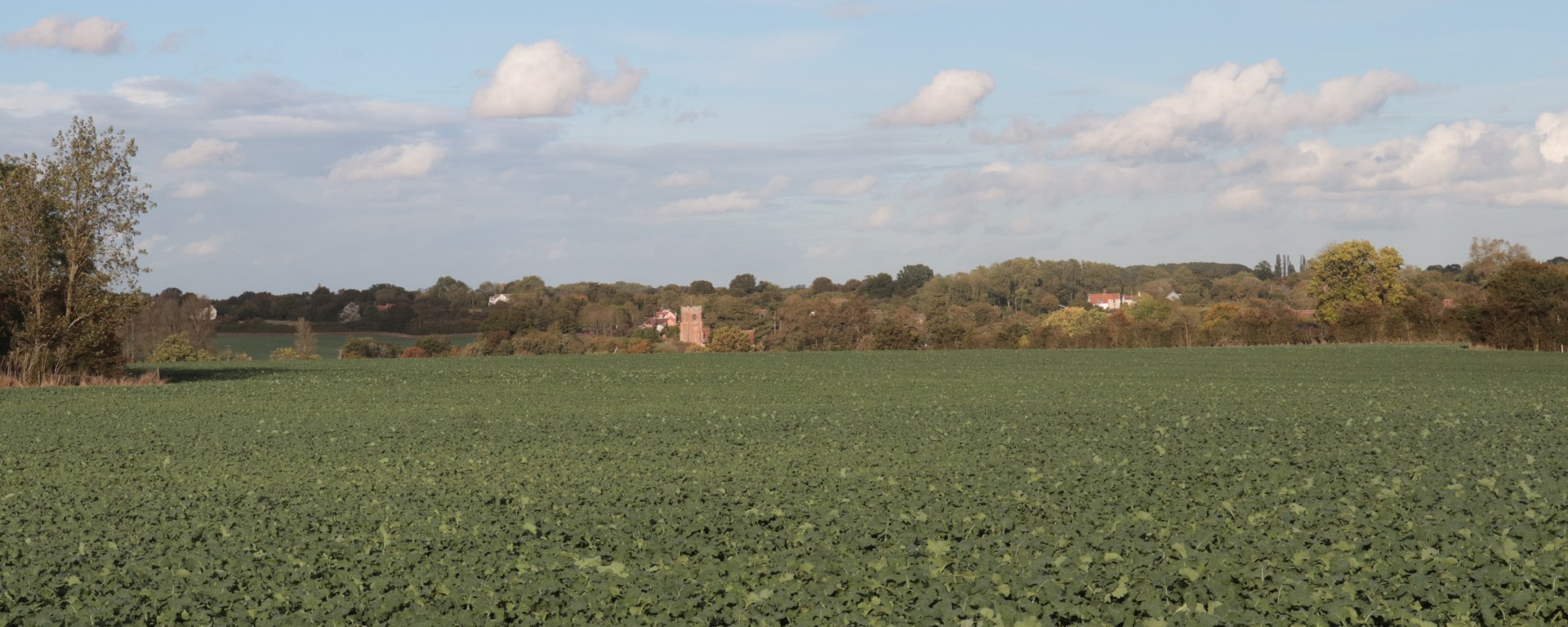
I think it’s a pretty open secret that the book, “Akenfield”, by Ronald Blythe, is really based on the village of Charsfield, just a handful of miles away from Hasketon. The two villages are actually reasonably comparable, having a similar population size and a strong agricultural background. Hasketon is even mentioned in the book as having a particularly fine peel of bells in the church.
As part of an interest in local history, I’ve been attempting to understand some of Hasketon’s past by looking at historical accounts from newspapers and some of the old archives. I hope I’ve conveyed some of that in these pages, but really, if you want to get a flavour of past life in rural Suffolk, Akenfield is the book to read. I seriously doubt I’ll be adding very much to the debate in these pages.
Reading it again recently, and wearing my home-brewers hat, I was quite struck by the account given by the farmer ‘John Grout’, of their recipe for making beer at harvest time.
“You took five or six pails of water in a copper. Then you took one pail of boiling water and one pail of cold water and added them together in a tub big enough to hold 18 gallons. You added a bushel of malt to the water in the tub. Then you added boiling water from the copper until there was 18 gallons in all in the tub. Cover up and keep warm and leave standing for at least 7 hours, though the longer the better. When it has stood, fill the copper 3 parts full from the tub, boil for an hour and add a half pound of hops. Then empty into a second tub. Repeat with the rest. All the beer should now be in one tub and covered with a sack and allowed to cool. But before this, take a little of the warm beer in a basin, add two ounces of yeast and let it stand for the night. Add this to the main tub in the morning and cask the beer. You can drink it after a week. And it won’t be anything like you can taste in the Crown, either”.
This sounds a like a pretty reasonable description of the brewing process, though a 7 hour mash is considerably longer than would be used nowadays (90 minutes is more typical), and the mash temperature looks like it might be somewhat high. So I’m wondering what such a beer might have been like. The quantities seem very reasonable: 18 gallons, plus a bushel of malt (about 15Kg), and half a pound of hops would give a fairly hoppy beer in the region of 4% ABV. Since the details of the malt isn’t given, the colour could be anything from pale to dark, but based on these figures, it’s potentially a very pleasant brew for drinking on a relaxing evening. I might try to replicate it sometime.
John Grout describes the harvesting by hand technique, and then says,
“We were allowed 17 pints of beer a day each, and none of this beer might leave the field once it had been brought. What was left each day had to be kept and drunk before eight on a Saturday night”.
Now with a 4% ABV beer, 17 pints is getting a bit more serious. Harvesting by hand on a hot day would have been hard and thirsty work of course, and the calories would be important, but the effects of the alcohol would mount up during the day. Come nightfall one can imagine a bucolic evening scene of the journey home, where those who could still stand up were valiantly helping those who couldn’t, the ditches were blocked up with the bodies of the fallen, and the whole village waking up with a large collective hangover the following morning. Work on the following day might just possibly start in the early afternoon.
Or maybe I’m just a bit of a lightweight and they were made of sterner stuff then!
Fortunately, given the relatively crude brewing process, the conversion of starch to sugars would probably not have been particularly efficient, resulting a considerably weaker beer – perhaps 2-2.5% ABV. That’s much more managable – even I could have handled that in my younger days.
 The Sheeprug Pages.